Gamma Robotics
GBotGBot
Integrating human-centered interaction, embodied manipulation and autonomous navigation, so robots can understand needs and continuously complete tasks in real spaces.
Human-centered interaction


- Sub-second voice interaction with flexible voice switching and custom voice cloning.
- Audio-visual fusion recognizes user emotion, supports expressive responses, locates the active speaker and maintains attention.
- Vision foundation models support scene and spatial understanding, object recognition and referential comprehension.
- Continuous dialogue supports interruption and follow-up, including conversations with multiple people.
- A rich library of atomic motions supports natural, continuous physical expression.
- Wake words, roles, knowledge bases and presentation scripts can be configured for different environments.
Fine-grained, long-horizon operation


- Our PRTS manipulation foundation model is pretrained on 167B operation and embodied-reasoning data.
- Goal-reachability awareness allows the policy to assess progress and adjust subsequent actions continuously.
- A unified manipulation policy addresses multi-step, contact-rich and unfamiliar instruction-following tasks.
- Deployed dual-arm tasks reach 95.9% average success, with no individual task below 90% and long-horizon tasks reaching 95%.
Adaptive autonomous navigation
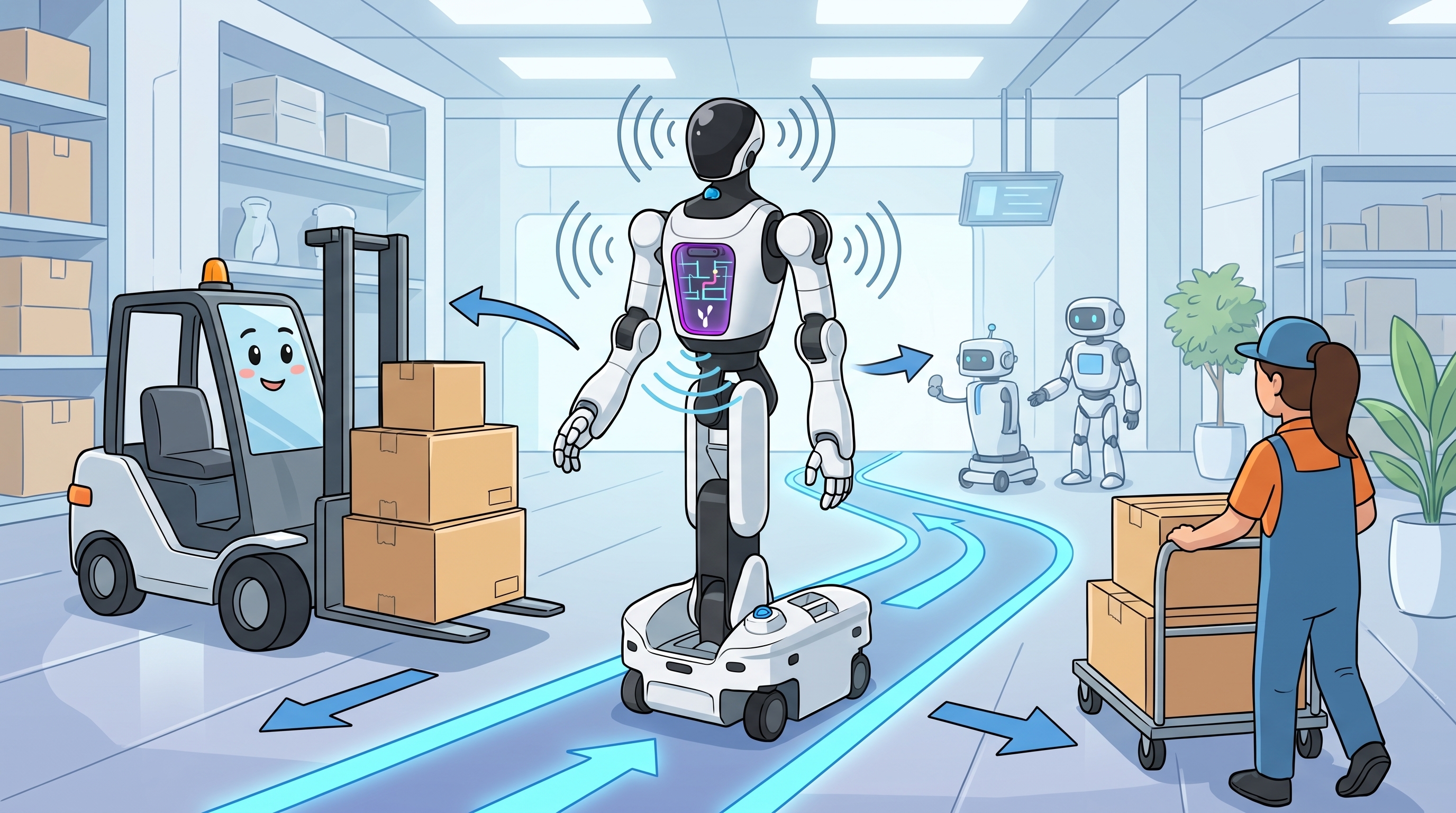
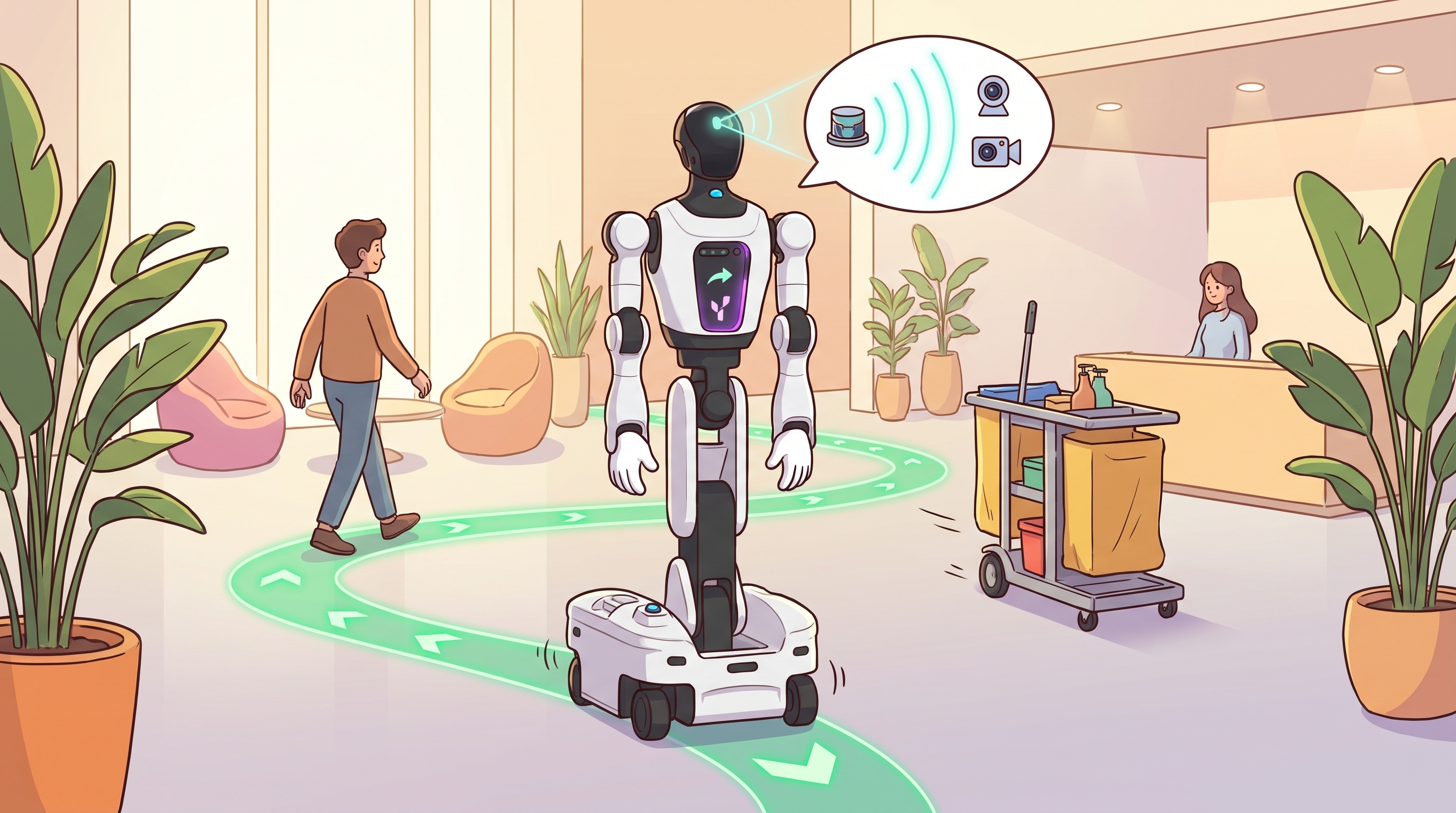
- High-precision mapping in unfamiliar environments supports semantic zones including slow and restricted areas.
- Centimeter-level global localization enables autonomous navigation to arbitrary map positions without human intervention.
- LiDAR, vision and ultrasonic sensing support real-time path planning and dynamic obstacle avoidance in dense spaces.
- Guide and follow modes adapt to mixed human-robot environments such as exhibition halls and campuses.
GBot-W
Industrial upper and lower body
- 14-DoF dual arms + 3-DoF waist + 3-DoF lower body
- 12 kg rated dual-arm payload; ±0.03 mm repeatability
- Total work height >2 m; front-to-back reach >3 m
- A workspace extending beyond the human range for complex operational scenarios

Joint-level force sensing
- Torque sensing across upper- and lower-body joints
- Dual-arm force-control accuracy ≤0.15 N and 0.05 N·m
- Adaptive impedance and collision detection
- Compliant control for human-robot collaboration and other contact-rich tasks

Omnidirectional mobility
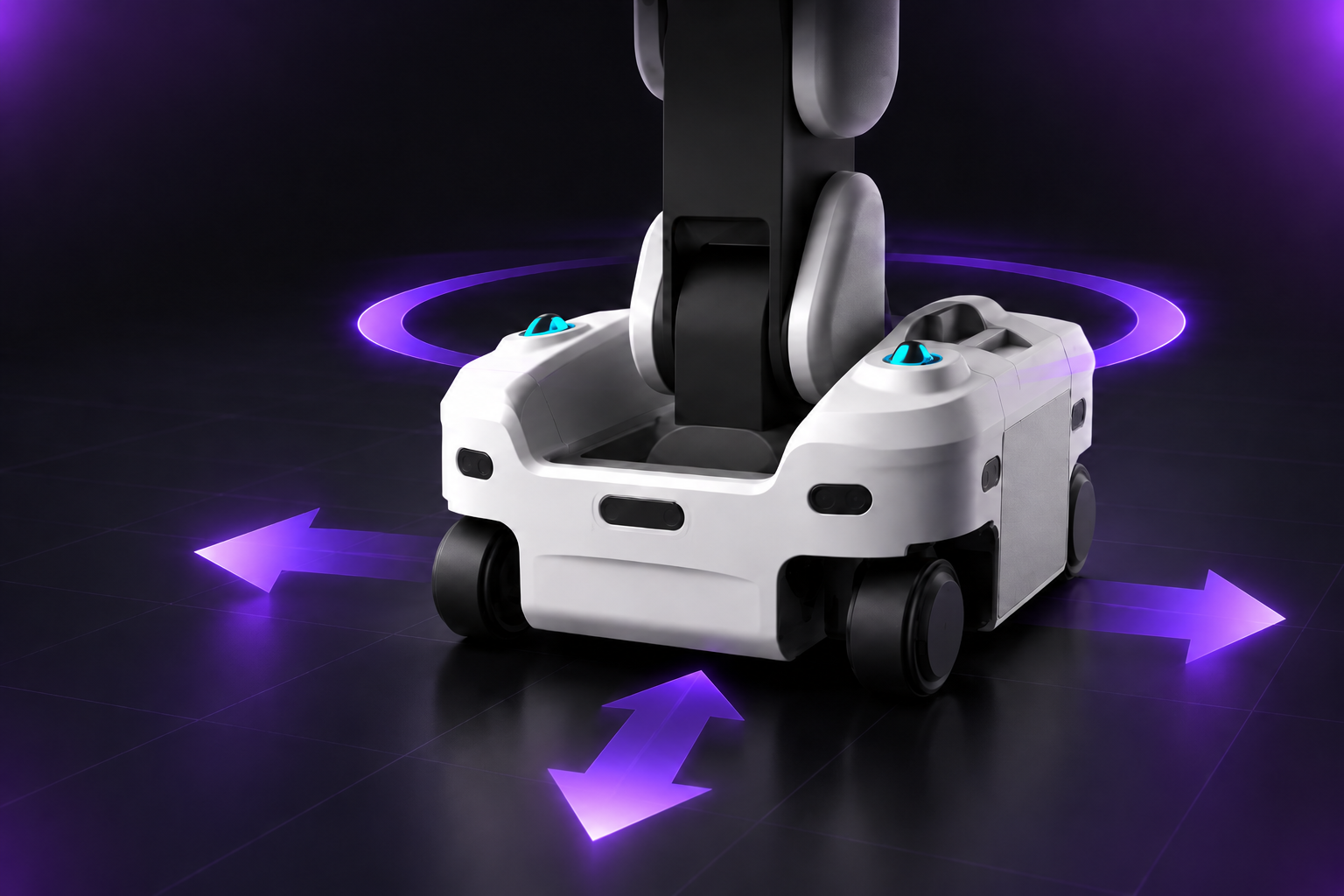
- Four-steering-wheel omnidirectional base
- Forward, lateral and in-place motion with a 0.78 m minimum turning diameter
- Maximum speed 1.5 m/s with slope, gap and threshold traversal
- Agile movement through narrow and mixed human-robot spaces

Multimodal environmental perception
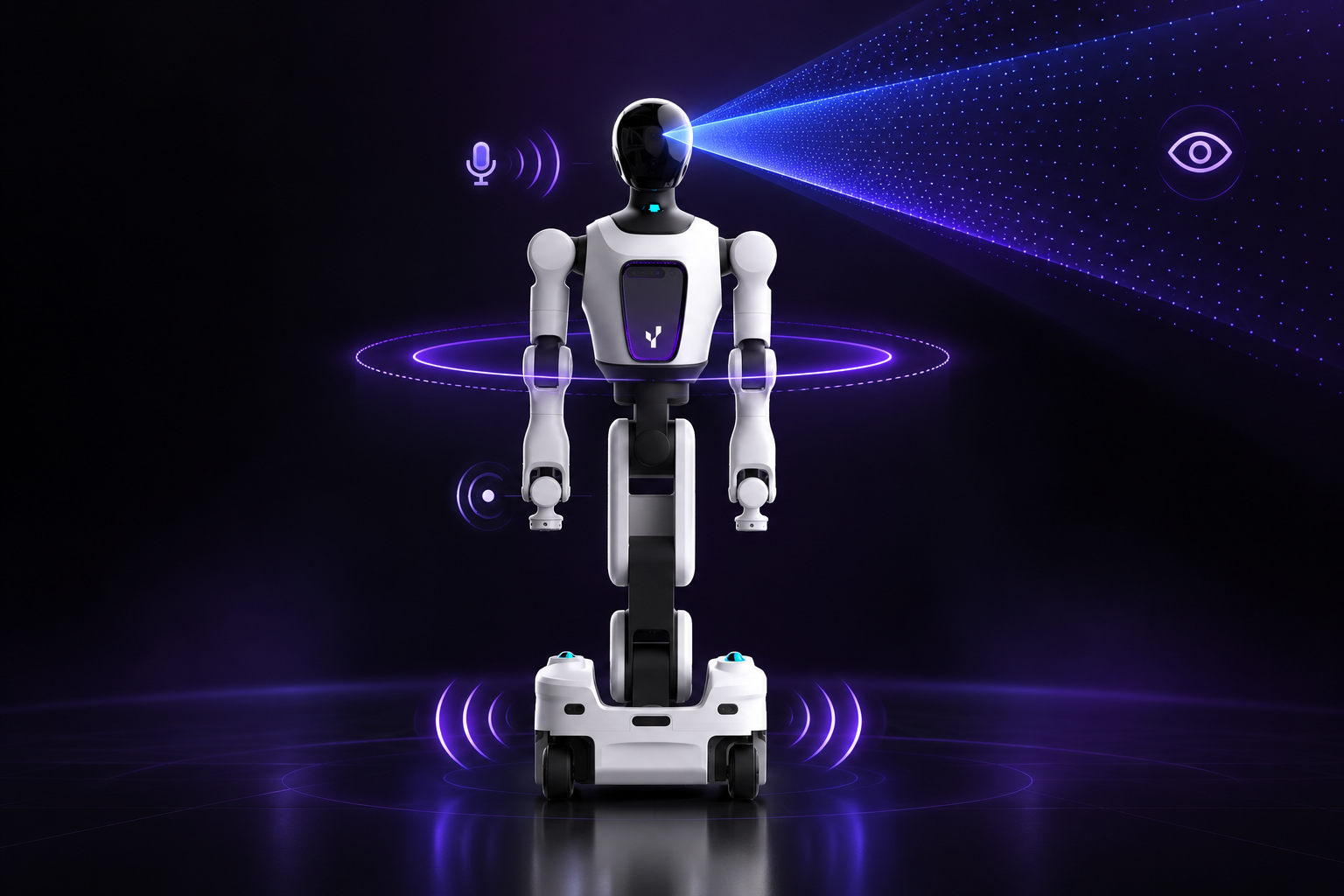
- 8 ultrasonic sensors + 3 LiDAR units + 2 RGB cameras
- 2 stereo cameras + 1 circular microphone array
- Full-body sensor coverage keeps the physical environment observable
Low-latency 5G communication
- CPE-enabled 5G public-network pairing with millisecond-level latency
- Supports human-robot and multi-robot communication across spaces
- Full-body remote teleoperation supports exception recovery and hazardous scenarios
All-day endurance
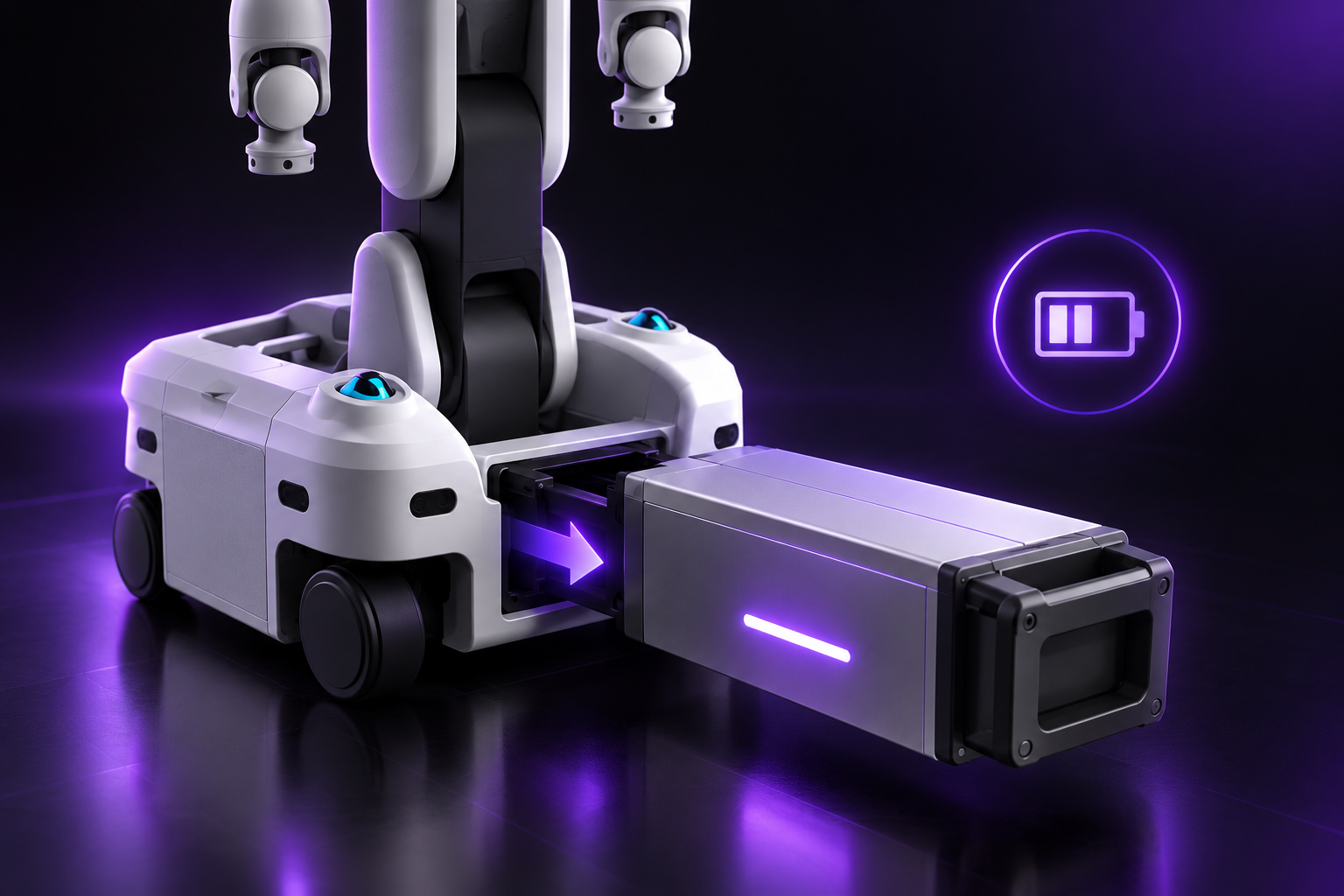
- Dual 48 V lithium iron phosphate architecture with up to 8 hours of combined-operation endurance
- Hot-swappable online battery replacement with automatic and manual charging
- 17.2 Ah per battery; charging time ≤1.5 h
GBot-W
Product Specifications
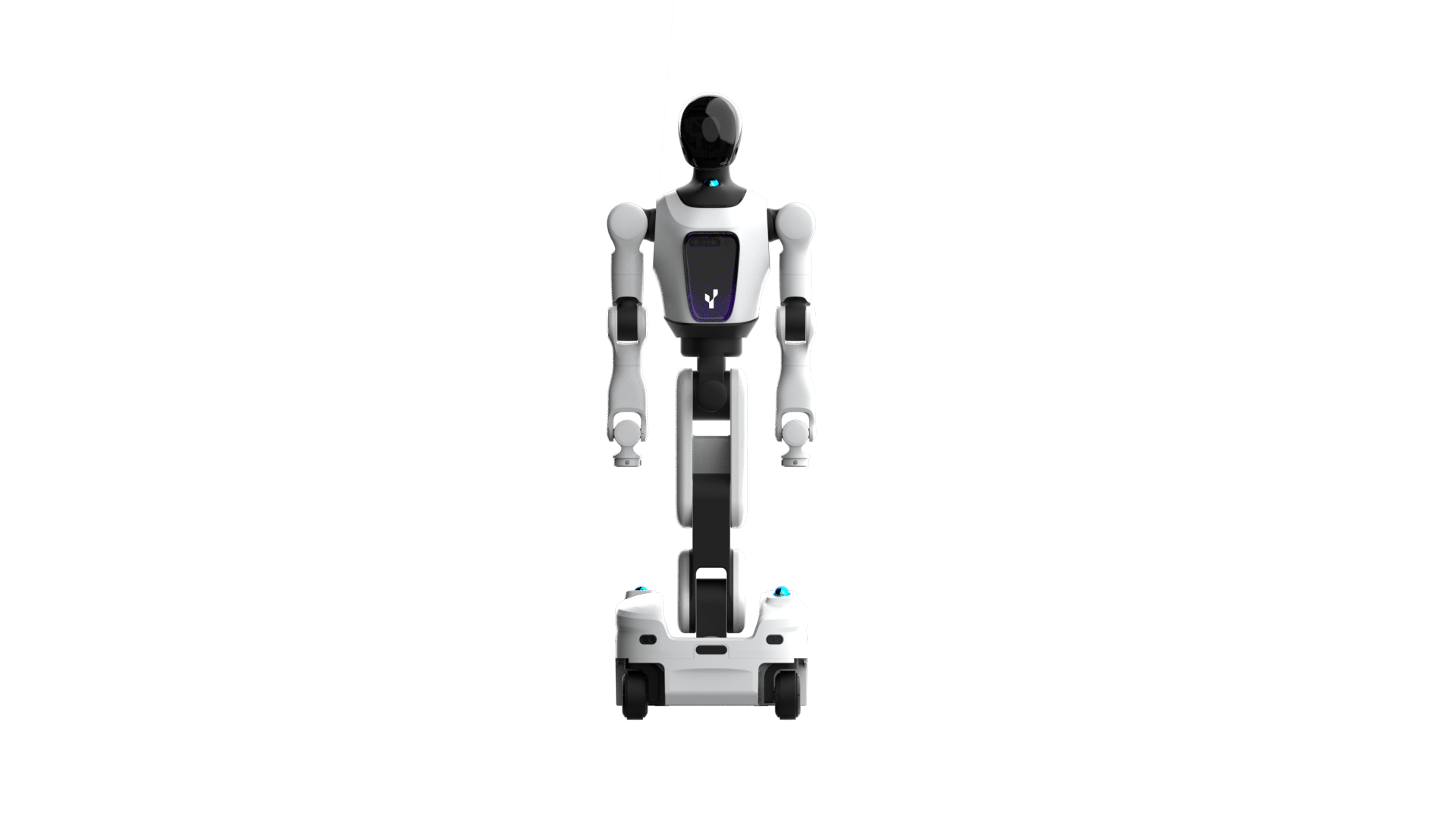
| General Specs | Dimensions | 670 × 550 × 1340–1800 mm (L × W × H; adjustable height) |
|---|---|---|
| Weight | 140 kg | |
| Total DOF | 22 (excluding both end effectors and the mobile base) | |
| DOF by body part | Neck: 2; each arm: 7; waist: 3; legs: 3 | |
| Workspace | Total working-height range >2 m; total front-to-back range >3 m | |
| Runtime | 4–8 h under mixed operating conditions |
| Upper Limbs | DOF per arm | Shoulder: 3 + elbow: 1 + wrist: 3 |
|---|---|---|
| Payload per arm | Rated: 6 kg | |
| Repeatability | ±0.03 mm | |
| End-effector speed | Max. TCP speed: 2 m/s; max. angular speed per joint: 180°/s | |
| Joint force control | Torque sensors on all joints; accuracy ≤0.15 N and ≤0.05 N·m | |
| Tool flange interface | RS485, CAN FD and EtherCAT; 24 V, rated 3 A; optional 6-axis force sensor | |
| End effectors | Optional dexterous hands, grippers and other end effectors |
| Waist & Legs | Waist DOF | Yaw: 1 + pitch: 1 + roll: 1 |
|---|---|---|
| Leg DOF | Pitch: 2 + roll: 1; free folding and height adjustment | |
| Joint force control | Torque sensors on all waist and leg joints |
| Mobile Base | Drive configuration | 4 steerable wheels; omnidirectional movement and turning |
|---|---|---|
| Travel speed | Max. speed: 1.5 m/s; rated acceleration: 1 m/s² | |
| Turning diameter | 780 mm | |
| Ground clearance | 40 mm | |
| Traversability | Max. slope: 10°; gap width: 30 mm; step height: 20 mm |
| External Sensing | RGB cameras | 12 MP ×2 (one each on the head and torso) |
|---|---|---|
| Stereo cameras | Torso: Gemini 335 ×1; front of base: stereo camera ×1 | |
| LiDAR | LIVOX MID-360 ×3 (torso: 1; base: 2) | |
| Ultrasonic sensors | 8 sensors positioned around the base |
| Voice Module | Microphones | Far-field circular neck array; 6-source localization, directional noise reduction and echo cancellation |
|---|---|---|
| Speakers | Head-mounted 10 W stereo speaker |
| Compute & Connectivity | Compute hardware | Full-performance NVIDIA Jetson AGX Orin; 275 TOPS, 64 GB LPDDR5 unified memory |
|---|---|---|
| Connectivity | Wi-Fi, Bluetooth and Ethernet; removable 5G CPE module with public-network pairing and millisecond-level latency |
| Power Supply | Battery capacity | 34.4 Ah (17.2 Ah LiFePO₄ battery ×2) |
|---|---|---|
| Battery voltage | Nominal: 48 V; operating: 41–54.8 V | |
| Replenishment | Hot-swappable batteries; automatic or manual charging | |
| Charging time | ≤1.5 h from fully discharged |